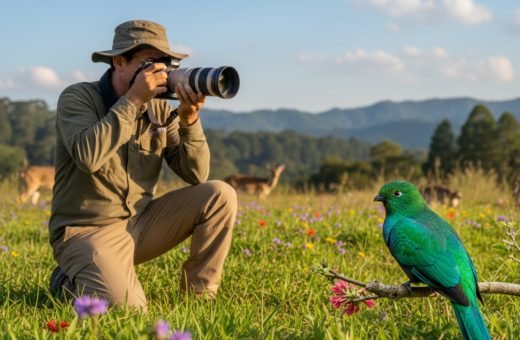
Choosing the right support changes how images are made. He tested an RRS TVC-34L Mk2 with a heavy Sony 600mm lens during a three-week trip to Southern Australia and Tasmania. That gear choice taught him how travel limits, weight and airline rules shape equipment decisions.
Stability matters when long lenses and slow shutter speeds meet movement. A sturdy carbon fiber setup reduced carry weight while keeping sharp results during dawn and dusk video and still work.
He noted that a versatile head and a reliable center column eased quick transitions between low ground angles and taller shots. Adding a kit with a monopod option gave useful mobility when subjects moved fast.
Practical choice balances price, features and long-term durability. Photographers must weigh height, leg sections and design to match their travel style and composition goals.
The Debate: Handheld Versus Tripod Shooting
Deciding between handheld work and a solid support often comes down to speed, lens weight and how long the shooter plans to wait.
Handheld freedom excels when action is unpredictable. It lets a photographer pivot, track quick subjects, and capture spontaneous frames without setup delays.
Benefits of Handheld Freedom
Benefits of Handheld Freedom
Handheld shooting provides immense mobility during fast-paced moments. It favors low gear weight and quick reactions, which helps during short bursts of activity.
When Stability Becomes Mandatory
For long stakeouts and heavy lenses, a tripod is essential. Tom Mason notes that prolonged waits and big glass demand a stable setup to avoid blur and fatigue.
“When using a super-telephoto lens, a tripod becomes mandatory to prevent the floppy mess that follows an unlocked ball head.”
- Heavy lenses and long sessions need steady support to keep composition steady.
- Action shooters often use a gimbal head for fingertip control and fast tracking.
- A ball head works for general nature work, but serious wildlife photography benefits from purpose-built heads.
- Adding a monopod can bridge mobility and consistent stability — see a quick comparison monopod vs tripod.
Capturing smooth video typically requires consistent support; handheld moves can introduce shake that ruins footage. The final choice depends on the shooter’s needs and the weight of their camera kit.
Essential Considerations for Your Wildlife Photography Tripod
A good support choice starts by matching load capacity to your heaviest camera and lens. He checked that total load before travel and chose gear that would hold a large super-telephoto without sagging.
Carbon fiber tripods often win on weight and strength compared to aluminum. They cut carry weight on long trips while keeping stability during slow shutter work.
Leg sections affect pack size and setup speed. More sections mean a smaller folded length but add more locks to operate. Many pros prefer a flat top plate or no center column to keep the center low and steady at ground level.
- Load capacity: size your support to the heaviest lens and camera.
- Head type: choose an Arca-Swiss compatible tripod head for quick mounting.
- Travel kit: balance price and durability; a quality system lasts through years of international use.
Tom Mason relied on his Gitzo Systematic for eight years in the Amazon and found the flat top design ideal for low-angle ground work. Choosing a kit that matches shooting style makes time in the field more productive. See a guide to the best tripod to match your needs.
Evaluating the Best Tripod for Wildlife Photography
When evaluating supports, material and head design decide how much weight a shooter will carry and how steady their kit will be.
Carbon fiber vs aluminum is the primary trade-off. Carbon fiber construction offers a clear weight advantage. Hikers and travel shooters benefit most from lighter legs that reduce fatigue.
Aluminum tends to cost less and can feel more robust in windy conditions. That makes it a smart choice when price and durability rank higher than every saved ounce.
Head designs and load capacity
Load capacity must match the heaviest camera and longest lens. The SIRUI PH-20 is a carbon fiber gimbal head built to stabilize large lenses during long waits.
The Acratech GXP ball head adds versatility by offering a special gimbal mode that smooths side-mounted super-telephoto movement. A skeletonized long lens head reduces weight without losing structural stability.
- Balance: a gimbal head gives fluid tracking; a ball head allows fast framing.
- Design: heads that permit precise adjustments improve composition.
- Center column: professionals use it for extra height but must mind stability loss.
Choice depends on budget, how far they travel, and how often they use heavy glass. Photographers who hike long routes will usually pick carbon fiber; those on tighter budgets may select aluminum and a stronger head instead.
Comparing Gimbal and Ball Head Functionality
How a head balances a long lens decides if the next frame will be sharp or lost.
Precision of ball heads
Ball heads offered tight control and fast framing for landscapes and static subjects. They gave precise tilt and pan with minimal fuss.
They could struggle with long, heavy lenses. Managing large glass on a single locking knob sometimes led to drift and fatigue.
Gimbal mechanics for super-telephoto lenses
Gimbal heads were built to carry side-mounted super-telephoto gear and let the camera pivot smoothly. The RRS PG-02 Mk2 allowed individually adjustable bearings, making it a top choice when long lenses needed fluid tracking.
Photographers used gimbals to follow birds and fast subjects with minimal effort and steady balance.
Hybrid heads, like the ProMediaGear GT2 Tomahawk, blended ball-style precision with gimbal fluidity. They gave a middle ground when price and features both mattered.
“Understanding head mechanics is crucial to achieve the stability needed for sharp images.”
- Carbon fiber parts kept overall kit weight low for travel and long waits.
- Removing the center column improved gimbal performance at low height.
- A monopod offered a lighter, quicker alternative when time or space was limited.
Choosing a head often came down to load, tracking needs, and budget. Many pros matched head type to lenses, video needs, and how they moved in the field. See a head comparison ball versus gimbal.
Specialized Support Solutions for Versatile Shooters
A modular head can change a kit’s behavior, turning a simple ball into a smooth gimbal that tracks long lenses with ease.
ProMediaGear’s GT2 Tomahawk attaches to a ball head via an Arca-Swiss dovetail, effectively converting standard heads into a gimbal-style mount. This lets a shooter keep one set of legs and swap heads as scenes demand.
Carbon fiber remains a key feature in these heads. It keeps added mechanics light so the kit stays travel-friendly without sacrificing strength.
- Modular designs let photographers add a monopod when mobility matters.
- Many heads work with existing legs, so buyers can upgrade piecemeal.
- Using a center column raises height but may reduce long-exposure stability.
“Specialized heads demand a higher price because they blend precision bearings with balanced damping.”
Professionals often carry multiple heads to match lens weight, video needs and terrain. Smart modular kits keep that flexibility while limiting extra bulk in the pack.
The Role of Fluid Heads in Video and Still Capture
When motion must look natural, the head’s dampening becomes the key technical choice. Fluid heads use internal cartridges to smooth pans and tilts. Brands like Sachtler FSB and Manfrotto Nitrotech are built with that precise damping in mind.
Dampening for Smooth Motion
Fluid heads are designed for professional video production and provide steady, controlled motion during long tracking shots. The drag settings let a shooter tune resistance to match subject speed.
They add noticeable weight to a tripod kit, so the balance between mobility and stability matters. Many pros attach an L plate and a leveling base to use a fluid head with still frames.
- Fluid heads deliver smooth pans ideal for video and mixed shooting.
- They weigh more than a ball head, which impacts travel and rigging.
- Using a monopod with a fluid head gives a lighter, mobile option when time is limited.
“Proper dampening turns handheld jitter into usable cinematic motion.”
Price reflects complexity: internal cartridges and precision dampers raise cost, but the result is pro-level clips alongside sharp stills when paired with the right camera and lens setup.
Balancing Weight and Stability for Travel
Travel rigs force a trade-off: shave ounces or keep rock-solid support during long waits. He chose the FlexShooter Pro on his Tasmania trip, which let him delete the leveling base and save significant weight.
Carbon fiber legs kept overall kit mass low while still giving the stability needed with long lenses. That light construction made hikes easier and reduced fatigue when shooting at dawn.
The FlexShooter Pro blends gimbal head fluidity with a compact ball head design. An integrated leveling base cut several hundred grams from the total setup and kept a low center of gravity.
Load capacity must match the heaviest camera and lens. If capacity is too low the kit will sag and images will suffer during long exposures.
- Choose carbon fiber legs to balance weight and stiffness.
- Consider a monopod as a lighter, quick alternative in crowded spots.
- Match head type and load to the lenses you travel with to protect image quality.
“Every ounce saved in the bag can translate to more time shooting and better final images.”
Conclusion
The best support disappears into the workflow so a shooter can focus on the subject. He recommended matching kit to travel limits and shooting goals. A lightweight monopod proved handy on long hikes and quick moves.
Choosing the right type, features, and price, meant balancing a ball head or gimbal against the weight of long lenses. The ideal system protected sharp frames and reduced fatigue during long stakeouts. It also fit the needs of wildlife photography without excess bulk.
He checked load capacity and plate fit to protect the camera and lenses. Consider a monopod when travel agility mattered and keep the center column low to preserve stability in the field.