Dense vegetation shapes how migratory species move, nest and fuel their long journeys. In the United States, many migrants pass through urban, suburban and rural areas each year during spring and fall. They search local yards and gardens for food and shelter as they travel between breeding and wintering grounds.
Research by entomologist Doug Tallamy shows that native oaks support hundreds more caterpillars than some non-native trees, which matters because it takes thousands of caterpillars to raise a single brood of chickadees. This link between trees, insects and nest success highlights why native plants are vital to a healthy habitat.
Thick shrubs and layered trees create cover for daily movement and provide sites for nesting and foraging. In concrete-heavy cities and open farm fields, these areas offer protection from predators and the microhabitats that sustain insects and leaves needed to provide food for young.
Understanding these patterns helps homeowners design yards that support migration and resident species. Small, intentional choices in garden layout can improve survival during the most demanding legs of migratory journeys.
The Ecological Importance of Bird Shelter Plants
Native vegetation forms the dietary and structural backbone that local avian species rely on through every season. Native plants evolved with regional fauna and deliver the exact nutrients and insects needed for growth and reproduction.
Douglas Tallamy’s research underlines that local flora supports far more caterpillars and other invertebrates than many non-native options. This means healthier nests, higher chick survival, and stronger populations of resident and migrating birds.
Non-native species can displace beneficial flora and break key food chains. Choosing the right trees and shrubs rebuilds those links and restores habitat complexity.
- Protection: Native shrubs and trees give layered cover for roosting and nesting.
- Nutrition: Seeds, berries and nectar from native plantings supply year-round food.
- Support: Native flora sustains local insects, the primary protein source for young.
Assessing Your Garden for Avian Habitat Potential
A simple site audit helps turn a yard into functioning habitat. A homeowner should record sun exposure and soil type before choosing native plants or arranging new trees and shrubs.
Evaluating Sun and Soil Conditions
Identify areas of full sun, partial shade, and full shade by observing the garden at morning, noon, and late afternoon. Note wet low spots and dry ridges.
Soil texture matters: sandy, clay, or peaty soils support different native plant species and affect long-term habitat value for birds and other wildlife.
Mapping Your Planting Zones
Create a simple map that marks light, moisture, and existing native species. Use it to place trees where they provide nesting sites and to cluster shrubs and flowers for feeding areas.
- Mark current native plants that local birds use for food or cover.
- Match species to sun/shade and dry/wet conditions.
- Consult a local native plant society for soil-specific recommendations.
Selecting Native Species for Nesting and Feeding
Choosing the right native species helps create reliable food sources and secure nesting spots across the seasons. A deliberate mix of trees, shrubs, and flowers supports a full food web that lasts from early spring into fall.
Prioritizing Native Trees and Shrubs
Oaks are top priorities: a single mature oak can host over 530 species of butterfly and moth caterpillars. Those caterpillars feed chickadees, thrushes, and many nesting species during the breeding season.
Select a variety of shrubs to supply berries and fruit across spring, summer, and fall. Cultivars of cherries that bloom in early May draw nectar-seeking migrants such as orioles and Cape May warblers.
Include native flowers like columbine and penstemon to attract hummingbirds with high-energy nectar. Sunflowers and coneflowers provide seeds for finches and sparrows, while host species for butterflies and moths keep insect protein available for growing young.
- Mix trees and shrubs for canopy and understory cover.
- Match species to light and soil conditions for long-term success.
- Focus on native plant diversity to support pollinators and seed producers.
Designing Structural Diversity into Your Landscape
Structural diversity gives a yard the varied heights and textures that wildlife need. It blends canopy trees, dense shrubs, and low-growing flowers or grasses to create safe nesting sites and feeding zones across seasons.
Creating Vertical Layers
Start with tall trees for canopy cover, add midstory shrubs for berries and nesting, and finish with ground-level grasses and flowers that harbor insects and seeds.
Clustering these layers in masses helps pollinators and passerine species move between resources with less exposure to predators.
Incorporating Brush Piles
Leave small leaf and woody debris piles beneath shrubs or near the tree line. These brush piles support moth pupae, caterpillars, and other insects that provide vital food.
Brush areas also offer refuge in winter and add structural complexity to the yard.
Providing Water Sources
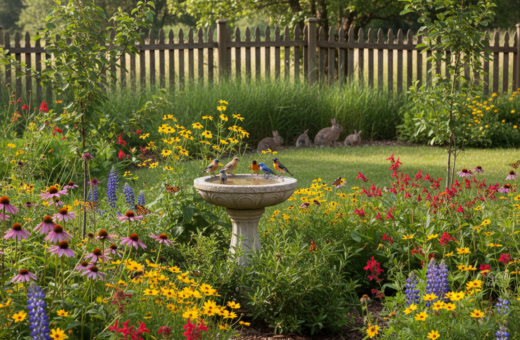
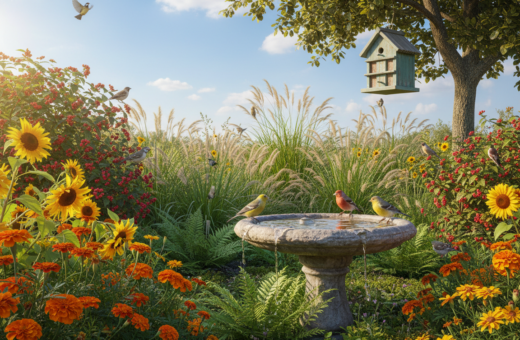
Install a shallow bird bath, hollowed boulder, or recirculating fountain to supply clean water year-round. Water attracts a wider range of species during migration and the breeding season.
For planting guidance on creating ecological structure, see ecological landscape design.
- Design tip: Leave fallen leaves as mulch to support insects and moth life cycles.
- Design tip: Aim for three to four vertical layers to mimic natural habitat and support pollinators and butterflies all year.
Seasonal Management for Migratory Success
Garden timing matters. A calendar-led approach keeps key resources available when migrants arrive in spring and fall.
In spring, arriving birds rely on insects found on tender, emerging leaves of trees. Retaining native trees and delaying heavy pruning ensures hungry nesters find enough protein.
Fall migration, from late August through November, shifts demand toward berries and seeds. Leaving fruiting shrubs and seed heads intact provides vital fuel for thrushes and sparrows on long flights.
Hummingbirds continue seeking nectar into mid-October, so include late-blooming flowers and avoid clearing beds too early.
“Timing maintenance to migration windows can increase survival chances for passing wildlife.”
- Delay cleanup: Wait until late May to remove stalks and leaf litter.
- Water source: Keep a reliable water source available year-round.
- Plant variety: Mix trees, shrubs, and flowers for continuous food across seasons.
Small adjustments yield big gains. By scheduling pruning and cleanup around migration, homeowners boost the year-round value of their yards and help migrants complete critical journeys.
Essential Practices for Maintaining a Healthy Ecosystem
A hands-off approach to yard care preserves the microhabitats insects and nesting species need to thrive.
Avoiding Excessive Garden Clean-up
Leave dead stalks, seed heads, and fallen leaves. These materials provide winter sites for moths and other insects that are the primary food source for many birds in spring.
Reducing pesticide and herbicide use protects pollinators like bees and butterflies. It also keeps the food web intact for chickadees and other species that rely on insect protein.
- Replace portions of lawn with native plants to increase habitat and reduce mowing.
- Allow flowers to go to seed in the fall to feed seeds-hungry birds through winter.
- Keep small brush piles and undisturbed areas as insect overwintering sites.
“Maintaining a slightly messy yard signals a healthy, functioning habitat that benefits wildlife and reduces emissions from mowing.”
Simple steps—less cleanup, fewer chemicals, and more native trees and shrubs—create lasting habitat for local wildlife.
Conclusion: Building a Resilient Backyard Habitat
Simple, steady actions in a garden add up to significant habitat value over time. Starting with the right native mix and a plan for food, water, and cover makes a measurable difference for local wildlife and migration needs.
Homeowners can reduce lawn area, delay heavy clean-up, and choose region-appropriate plants to boost insects and seasonal food. Even small patches of nectar, fruit, and seed help a migrating or nesting individual find fuel and rest.
Every native addition matters. Over months and years, these choices knit yards into a resilient network that offsets habitat loss and supports healthy populations.