Creating a year round bird garden gives homeowners a front-row seat to wildlife and boosts local biodiversity. This introduction outlines how selecting the right plants, seeds, and feeders provides food and shelter through spring, summer, fall, and winter. Pennington Classic Wild Bird Feed is noted for giving nesting birds steady energy during critical times.
Simple plant choices and layered plantings support insects and nectar that sustain birds and other wildlife. Careful placement of trees, shrubs, and flowers creates nesting spots and safe cover. Observing local species helps people tailor plant selections and feeding routines.
Prioritize clean feeders, fresh food, and water while planning for seasonal bloom succession. Learn practical steps and native-plant ideas by visiting a trusted guide on creating welcoming habitat: creating a bird-friendly garden.
Designing Your Year Round Bird Garden
Survey your outdoor space first so you can place trees, shrubs, and feeders where they thrive. A short site check reveals sun exposure, shade pockets, and soil type. This simple step guides plant choices and the best spots for water and shelter.
Assessing Your Space
Map the yard to mark sunny and shaded areas and note soil drainage. Small sketches help plan where large canopy trees will grow and where lower shrubs will fit without crowding.
Observe where songbirds land and feed. Those spots already offer good resources and can be enhanced with native plants or a Pennington Cedar House to add secure nesting sites.
Creating Habitat Layers
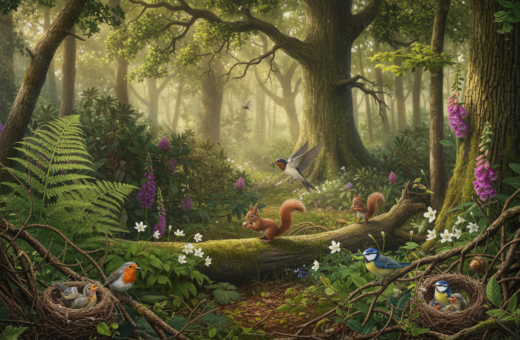
Layered plantings combine canopy trees, mid-level shrubs, and herbaceous plants to provide shelter and food for many species. This structure supports nests, cover, and foraging places.
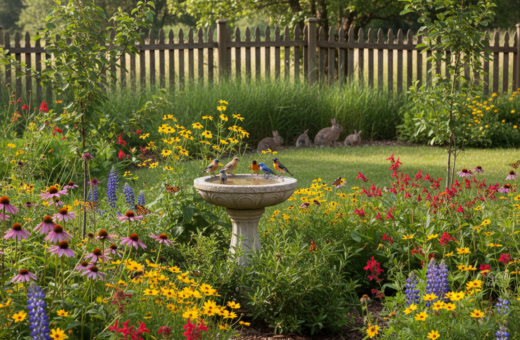
Include water sources such as a man-made bird bath or hollowed boulder. A Pennington Cedar Hanging 2 in 1 Bird Bath/Feeder adds a compact option for drinking and bathing.
“Diverse layers make a safer, more attractive place for wildlife.”
- Assess light and soil before planting native species.
- Install a Pennington Cedar House for secure nests.
- Provide water and multiple plant layers for shelter and food.
For guidance on plant choices suited to habitats and pollinators, consult a trusted guide to creating a bird-friendly garden.
Selecting Native Plants for Seasonal Food and Shelter
Select a mix of local trees, shrubs, and perennials that supply insects, seeds, and shelter all season. Native plants form the backbone of a healthy habitat and support the insects many species need when they raise young.
Providing Protein-Rich Insects
Boost insect abundance for nestlings
Nearly 96% of land birds rely on insects to feed their chicks. Plant oaks, willows, and birches to host caterpillars and other larvae. Add early wildflowers like Pennington Organic Siberian Wallflower Seed to attract insects in spring.
Stagger berry production
Include viburnum and serviceberry so berries ripen at different times. That ensures a steady food source during fall migration and into winter. Shrubs with berries also offer shelter and nesting cover.
Offering Seeds and Nectar
Provide seeds and nectar for all seasons
Plant perennials like purple coneflower and sunflower for winter seeds. Cosmos from Pennington Mixed Seashell Cosmos Seeds draws pollinators and supplies nectar that supports insects birds need. Use Pennington Rejuvenate Plant Food 4-3-3 to keep acid-loving plants productive and attractive to visitors.
“A mix of native trees, shrubs, and perennials creates a reliable source of insects, seeds, and berries for birds at every time of year.”
- Choose native plants to maximize insect protein for chicks.
- Plant fruiting shrubs with staggered berry times.
- Mix nectar flowers and seed-producing perennials for seasonal support.
Essential Habitat Features for Wildlife Success
Essential habitat features turn ordinary turf into dependable sources of food and shelter for local wildlife.
Converting part of the 40 million acres of lawn in the U.S. into native plants gives songbirds real benefits. Native oak trees support about 557 species of butterflies and moths, vastly more than many non-native trees. Those insects become a crucial food source for chicks and adults alike.
Reduce pesticide use and limit gas-powered mowing to protect insect populations and cut emissions that affect migration. Leave dead branches and small snags where safe; these offer nesting sites and shelter for species such as bluebirds and woodpeckers.
Create a brush pile in a quiet corner and add a small water feature so birds have shelter and reliable water. Choose a variety of shrubs and perennials that provide seeds, berries, and fruit into winter, keeping the place functional through cold months.
“Small shifts in plant choices and lawn care create lasting habitat for local species.”
- Convert lawn to native plant beds to boost habitat and food sources.
- Select oak and other native trees to support insects for songbirds.
- Provide brush piles, water, and leave dead wood for nesting sites and shelter.
Seasonal Maintenance Tips for a Thriving Backyard
Letting parts of the landscape age naturally supplies food and nesting materials when birds need them most.
The Benefits of a Slightly Messy Garden
Keep seed heads and berries on plants into late fall. Those leftover seeds become a vital food source for birds in winter.
Avoid raking every leaf. Fallen leaves and woody debris act as mulch and habitat for insects that birds rely on for protein.
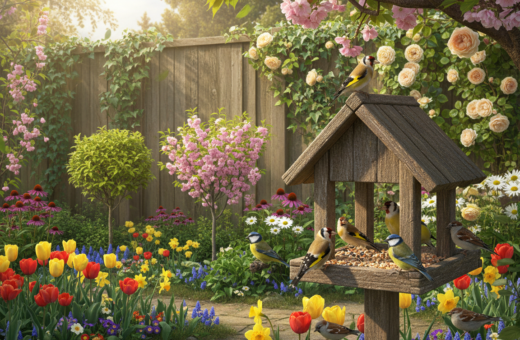
Use a reliable feeder like the Pennington Cedar Junior Pavilion Bird Feeder to offer food from all sides and invite a steady view of visitors.
Feed high-energy mixes such as Pennington Ultra Double Nut, Nut & Fruit Blend during cold months. Real fruit and nuts give birds the fats they need for migration and survival.
In summer, keep a clean bird bath filled with fresh water so songbirds can cool off and hydrate. Plant a variety of flowers and shrubs to supply nectar and seeds throughout the season.
- Leave perennials and sunflower heads standing for winter seed.
- Retain brush piles and small snags for shelter and nesting sites.
- Rotate water and seed offerings to support many species year-round.
Conclusion
A thoughtful planting plan, paired with steady food and water, turns a small yard into reliable wildlife habitat.
Creating a welcoming place for birds requires choosing native plants, offering clean food, and keeping water available through spring, summer, fall, and winter.
Observe changes over time to learn which plantings and feeders work best in each season. Small actions—like leaving seed heads or adding a feeder—help local wildlife every day.
These steps benefit people too: a healthy garden invites nature closer and makes outdoor spaces more enjoyable. With steady care, the landscape will grow into a thriving, shared habitat that brings lasting joy.