Amy Chong, a former board member of the Golden Gate Bird Alliance, warns that many new gardeners miss key steps when planning native plant spaces. Her information shows that a simple plant list is not enough.
Successful yards give steady food, reliable water, and safe shelter. Many focus on looks instead of the functional way a garden supports birds, butterflies, and pollinators.
Chong adds that the time spent planning your landscape changes outcomes. Thoughtful placement of native plants and consistent resources helps wildlife return more often.
This introduction outlines common errors and offers practical tips for gardeners. The goal is to guide readers toward creating a garden that invites wildlife back, again and again.
Common Backyard Habitat Mistakes That Deter Wildlife
Many conventional lawns create vast, empty stretches that few native species can use. These large, uniform areas often count as one of the most common backyard habitat mistakes.
Traditional US landscape designs favor imported plants and broad turf. Robert Petty noted that lawns now cover an area equal to New England, leaving ecological deserts where animals and pollinators find little food or shelter.
Homeowners often reach for chemicals and pesticides to keep a yard tidy. In truth, those products repel beneficial insects and birds and harm soil life. Synthetic fertilizers add another strain by changing plant communities and nutrient cycles.
“Removing routine chemical use and planting native species restores balance,”
The shift to a wildlife-friendly garden starts small: swap some turf for mixed native plants, add layered shrubs, and cut use of sprays. Over time, a thoughtful landscape supports more species and looks resilient and vibrant.
The Importance of Proper Plant Spacing and Layering
How plants are arranged matters as much as which species are chosen. Proper spacing creates stacked canopy zones that offer shelter, food, and movement paths for wildlife. These vertical layers support birds, bees, and butterflies across the year.
The Role of Vertical Canopy Layers
Trees with large mature sizes, like Toyon, should not sit next to a home. Amy Chong warned that a 30-foot tree too close to a foundation can cause moisture and structural issues over time.
Layered plantings combine tall trees, mid‑height shrubs, and ground covers. This mix creates feeding areas and shelter for bird and insect species. Use native plant spacing so each plant can reach its full size without crowding.
Avoiding Over-Pruning Near Foundations
Over-pruning close to foundations removes crucial cover. Leaving shrubs and small trees intact gives birds safe perches and nesting shelter.
- Spacing tip: leave enough space for manzanita and similar native plant species to mature.
- Soil care: use mulch between plants to retain moisture and sustain soil insects that serve as food.
- Pruning rule: avoid heavy trimming near the home to preserve shelter year-round.
“Proper spacing and layered plantings keep wildlife returning while protecting your home.”
For guidance on native planting and structural improvements, see native plant improvements.
Managing Water and Soil Conditions for Local Species
A garden that respects natural soil and water patterns needs less supplemental care and supports more species.
Group plants by hydro-zones to match moisture and reduce irrigation. Amy Chong recommends putting riparian species, like Dogwood (Cornus sericea), in low, wetter zones. Coastal types such as Goldenrod (Solidago spathulata) go in fast-draining areas with little extra water.
Grouping Plants by Hydro-zones
Start by testing your soil. Know if the area is slow-draining clay or quick-draining sand. This guides where each plant belongs and which nutrients will be available.
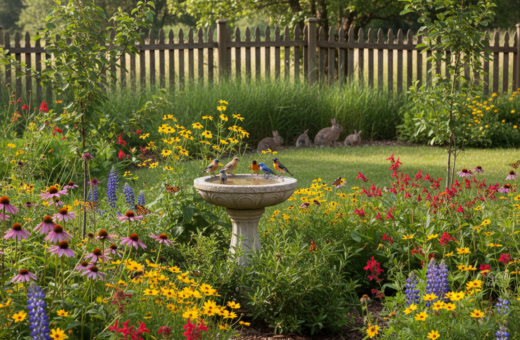
Provide a consistent water source for wildlife. A small bird bath or a shallow basin helps birds and other creatures through dry spells.
- Match species to conditions: place moisture-loving plants together and drought-tolerant ones in dry zones.
- Reduce runoff: use mulches and swales to keep water in the soil where plants and wildlife can use it.
- Support food and shelter: healthy soil and proper water make plants more productive for birds and other life.
“Grouping by hydro-zones is a practical way to manage water needs and ensure each species gets the right nutrients.”
Avoiding Chemical Hazards and Invasive Plant Species
Chemical runoff and invasive plants quietly erode the quality of a garden, driving away the wildlife gardeners hope to attract. Reducing toxic sprays and removing smothering weeds helps restore food, water, and shelter for local species.
The Dangers of Pesticides and Herbicides
Pesticides and herbicides kill more than pests. They reduce beneficial insects and poison the soil that supports native plants and birds.
Since 2009, the Backyard Habitat program enrolled 14,000 properties in the Portland metro area to cut pesticide use and control invasives.
Identifying and Removing Nuisance Weeds
Invasive vines and aggressive weeds can smother native plant species and reduce food sources for bees, butterflies, and other wildlife.
Remove nuisance weeds carefully, replace them with diverse native plants, and use mulch to suppress regrowth and protect soil.
Creating Safe Nesting Environments
Reducing chemicals is a core step to provide safe nesting areas for birds and insects. Small changes make a big difference.
- Program support: local initiatives offer information on removing ivy and other invasives.
- Real results: Patrice Ball earned Gold certification in 2022 after improving native plant diversity and nesting areas.
- Practical tip: use mulch, maintain shrubs for cover, and keep a reliable water source nearby.
“Remove toxins and reinstate native plants to bring food, water, and shelter back into the landscape.”
Conclusion: Building a Sustainable Haven for Local Wildlife
, Small, steady changes to planting and water care turn a simple yard into a reliable refuge for wildlife. Use native plants and a mix of shrubs and trees to offer food and shelter through the year.
Avoid pesticides and harsh chemicals. Healthy soil, mulch, and the right plant placement boost nutrients and support insects, bees, and butterflies. A bird bath or shallow basin provides dependable water for many species.
With time and consistent gardening, even a small backyard space can become a thriving garden. Follow these practical tips and the provided plant list to make a lasting, wildlife-friendly landscape that welcomes life back, season after season.