When shelter, water, and food are in balance, a small garden becomes a thriving place for native species. This practical approach helps birds, small mammals, and plants find what they need close to home.
By adding native plant choices and simple water sources, people create a landscape that mimics natural habitats. That mix supports nesting sites, seasonal food, and safe corridors between green areas.
Science shows that thoughtful planting and steady maintenance make long-term gains. Gardeners in the United States can plan with conservation in mind and reduce the pressure from nearby development.
Even compact spaces play a big role. With a clear plan, small patches serve as reliable sources of support for species and help sustain local biodiversity over time.
Understanding Ecosystem Health in Small Gardens
A small garden’s health depends on how well its living parts interact and support one another. This balance shapes which species arrive and persist. It also determines how resilient a yard is to change.
Defining Ecosystem Health
Ecosystem health means the connectedness of all organisms, soil, water, and plants. Experts compare it to a human body: when one part fails, the whole system can suffer. Science shows that strong links among species and plant layers keep energy and nutrients moving.
The Impact of Fragmentation
Fragmentation breaks up continuous areas and creates barriers for species. That loss of corridors forces animals to cross risky ground and reduces breeding success.
- Ecosystem health depends on interconnected parts, according to the National Wildlife Federation.
- Invasive species and free-roaming cats harm local communities; outdoor cats kill about 2.4 billion birds yearly in the United States.
- People can improve the ground layer by choosing plants that work well in local communities of species.
“A well-managed garden can act as a refuge for species facing habitat loss and fragmentation.”
For example, a small, intentional plot can support nesting birds and pollinators. With simple steps, gardeners help sustain nearby habitats and strengthen local communities.
The Role of Biodiversity in Wildlife Habitat Design
When many species share space and resources, a yard can better absorb stress and recover from disruptions. Biodiversity acts like an insurance policy: varied plants and animals keep energy flowing and reduce the chance of collapse after drought, pests, or human change.
Conservation efforts work best when they focus on the whole community of organisms that rely on a garden’s resources. Simple choices — adding native forbs, shrubs, and seed sources — expand food webs and shelter options for insects and small animals.
Aldo Leopold argued that species diversity underpins stability across any given habitat. That idea still guides modern conservation efforts and community projects in U.S. yards.
“To keep every cog and wheel is the first precaution of intelligent tinkering.”
- More food types support complex communities of insects and birds.
- Broader plant mixes improve soil and water resilience.
- Collective action helps restore balance lost to development.
Assessing Your Property for Wildlife Potential
A focused walk around the property uncovers microclimates, drainage issues, and planting opportunities. A quick map of sun, shade, and slope helps form a simple plan that fits the area and available time.
Analyzing Soil and Drainage
Start by digging a 12-inch hole in several spots to check how fast water drains. If water stands for more than a few hours, choose plants that tolerate wet soils. If it drains in minutes, pick species that prefer drier ground.
Record microclimates—cool hollows, hot sunny banks, and sheltered corners. This makes it easier to place shrubs and native plants where they will give the most benefit.
- Assess the current landscape to see what helps or hinders local wildlife.
- Dig test holes to match native species to soil drainage and texture.
- Watch for invasive species and remove them early so natives have time to establish.
Example: In New England, where about 65 acres of forest are lost each day to development, creating a high-quality wildlife habitat on even a small lot matters. A clear assessment lets a homeowner make targeted choices and improve the longer-term value of their landscape.
Identifying Local Species and Their Specific Needs
Start by listing the animals and insects that visit the yard to learn what each species needs. Early-morning and evening watches reveal which species use feeders, flowers, and water. Keep a brief log with dates and behaviors.
Use local extension materials to match sightings to local needs. Many county offices offer guides and plant lists that explain which food and shelter each species prefers. See wildlife habitat guidance for regional resources.
Record seasonal shifts so the garden supplies year-round resources. Simple notes on where birds nest or which insects visit flowers help shape planting choices. This builds a clearer community plan over time.
“To know what lives nearby is the first step to protecting it.”
Understanding species needs guides practical conservation actions. Small changes—adding cover, seed-producing plants, or shallow water—can meet the specific needs of the local place.
Setting Realistic Goals for Your Outdoor Space
Realistic planning starts where your energy, funds, and the land’s limits meet. Setting goals that match maintenance capacity helps keep projects on track and lasting.
Begin with measurable objectives: choose two or three clear targets, such as adding native shrubs, installing a shallow water source, or planting a pollinator patch. Small wins build momentum.
A suburban quarter-acre lot can support songbirds and pollinators when goals are specific and timed. Expect progress over two to three growing seasons, not weeks.
Consider budget and time. Break tasks into seasons: year one for soil and structure, year two for plantings, year three for refining and monitoring.
“Our connection to the land guides how we plan and what we keep.” — inspired by Terry Tempest Williams
- Match chores to available time to avoid burnout.
- Track simple metrics: number of native plants, visits by songbirds, and bloom months.
- Focus on achievable steps that deliver steady benefit to the local habitat.
Creating Effective Edge Habitats
Edges where two ecosystems meet often concentrate food, cover, and nesting sites in a compact area.
These transition zones boost biodiversity and make small yards more productive for many species.
Benefits of Edge Habitats
Edges provide a mix of resources — seeds, nectar, shelter, and varied microclimates. That mix supports birds, small mammals, and pollinators in a limited space.
Layered planting of shrubs and trees creates safe corridors for movement. This approach helps small mammals and bird species travel through the landscape with less risk.
“The potential density of game is proportional to the sum of the type peripheries.”
Limitations of Fragmented Areas
Fragmentation and development reduce edge value by shrinking habitat patches and breaking corridors. Isolated areas can lose species over time.
- Create wavy, irregular edges rather than straight lines for better shelter and nesting sites.
- Connect pocket patches with shrubs or tree rows to improve movement and resource flow.
- Plan planting to increase periphery length and support local biodiversity.
Expanding Transition Zones for Wildlife
Expanding the transitional strip from turf to woody plants helps connect small green patches across a neighborhood. A three- to six-foot replacement of lawn with native grasses and shrubs creates a soft, gradual shift in the landscape.
These buffers act as vital corridors, giving many species cover and food as they move between different habitat types. Wider edges reduce the edge effects of development and lower mortality risks for animals crossing yards.
For example, a stepped transition from lawn to shrub to tree line provides varied bloom times, seed sources, and shelter. This layered approach supports pollinators, small birds, and ground insects that often lack resources in fragmented areas.
Thoughtful placement matters: align strips along property margins or near existing green corridors so the property strengthens the local network of habitats. Over time, these modest changes add space for native species to thrive and help the broader landscape recover.
- Replace 3–6 feet of turf with native grasses and shrubs.
- Create stepped plantings from lawn to woodland edge.
- Place buffers to link nearby green areas and corridors.
Layering Vegetation for Maximum Support
A multi-tiered planting strategy gives more food, cover, and nesting options in a small space. Stacking layers from the soil up creates a richer landscape that supports many species across seasons.
Ground Layer Essentials
Native bunch grasses, low forbs, and leaf litter provide seeds and shelter. Those elements feed birds and protect small mammals from predators.
Shrub Layer Benefits
Shrubs like serviceberry or dogwood supply fruit and safe nesting sites. They act as a bridge between low cover and taller trees, increasing usable space for many species.
Canopy Layer Functions
Taller trees offer shade, perches, and seasonal food. A healthy canopy stabilizes soil and helps retain water for the whole plot.
Allow layers to intermingle so plants form diverse patches. This mix boosts biodiversity and makes small areas more resilient over time.
- Ground cover: seeds, shelter, year-round use.
- Shrubs: food, nesting, mid-level cover.
- Trees: perches, seed sources, microclimate control.
Incorporating Natural Features for Shelter
Intentional placement of brush, rock, and standing wood supplies instant cover for birds and small mammals. These features give shelter while new plants take root.
Place a brush pile about four to six feet wide to create a close refuge for small mammals and insects. Leave some leaf litter and low branches on the ground to increase shelter and food for ground species.
Keep snags—standing dead trees—when they are safe. Snags offer essential nesting sites for woodpeckers and other cavity-nesting species. A single tree can support many birds and mammals over time.
“Small structural elements speed the return of biodiversity to an emerging landscape.”
- Rock piles warm reptiles and amphibians and add microclimates.
- Brush piles provide immediate cover while shrubs establish.
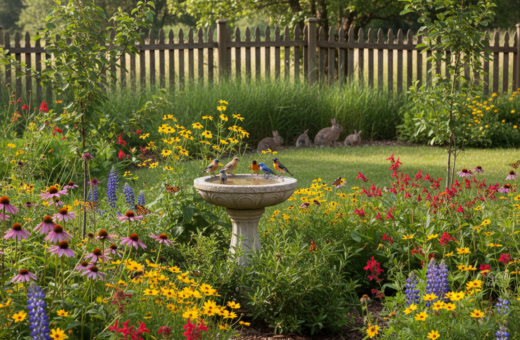
- Simple water features, like a birdbath, supply reliable hydration for visiting wildlife.
- Keep plant debris in sheltered corners to expand nesting sites and food sources.
Selecting Native Plants for Regional Success
Choosing regionally adapted plants gives small yards the best chance to support local species year after year.
Native plant choices establish a balanced landscape that supplies food and shelter through changing seasons. A mix of trees, shrubs, and wildflowers extends bloom and seed times so many species find resources across the year.
Organizations like the Environmental Protection Agency offer tools and resources to identify what grows naturally in a given area. Using those guides helps create a tailored plan that fits soil type, sun, and water availability.
Native plants also cut water use and reduce maintenance over time. Conservationists note that restoring native communities is a key step in rebuilding biodiversity and reconnecting fragmented habitats.
“Selecting locally adapted species is one of the most effective steps a gardener can take to support local communities.”
- Pick a mix of trees, shrubs, and wildflowers to widen resources.
- Consult EPA and extension services to match plants to local soils.
- Start small and expand the plan over time to track species response.
Managing Water Sources for Diverse Species
Providing varied water sources makes the landscape more attractive to a broader range of species. Clean, reliable water draws birds, pollinators, and small animals through dry months.
Place shallow birdbaths or shallow puddles near shrubs and low cover so visitors can drink and bathe while staying safe.
Offer both shallow and deeper options. A shallow basin serves butterflies and small birds. A slightly deeper bowl or small pond supports amphibians and larger species.
Consistency matters: refill and clean features regularly to prevent disease and keep resources usable across seasons.
- Locate water close to nesting or cover sites so animals can leave quickly if threatened.
- Vary depth and texture—rocks, sloped edges, and gentle shelves help many species access the source.
- Monitor use and adjust placement to boost local biodiversity and support native plants and animals.
“A dependable water source is one of the simplest steps to strengthen small-area habitat.”
Implementing Sustainable Maintenance Practices
Simple shifts in upkeep can turn a mower-focused lawn into a resilient, resource-rich landscape.
Reducing lawn area is the fastest step toward habitat restoration and greater biodiversity. The United States has converted 40 million acres into lawn, and Americans burn about 800 million gallons of gas each year to maintain these biological deserts.
Leaving fallen branches and dead wood on the ground adds nutrients and shelter for many species. Rotational cutting and selective thinning keep shrubs and trees healthy while preserving corridors for movement across the landscape.
- Replace parts of turf with native plant patches to increase food and nesting sites.
- Use rotational mowing to allow flowers to set seed and support pollinators and small mammals.
- Retain a safe tree or snag when possible to boost site value for birds and insects.
“A shift from high-maintenance lawns to thoughtful stewardship returns energy to the ground and life to the local community.”
Over time, these practices help people move from intensive upkeep toward a low-input plan that supports plants, species, and lasting habitat restoration.
Monitoring Wildlife Activity and Habitat Progress
Systematic checks—notes, photos, and quick surveys—turn impressions into measurable progress for your garden. A short log records who visits, when they come, and which plants they use.
Take photos from the same spots each month. Images show how plant structure and cover change over time.
Early-morning watches reveal birds and other visitors. Those observations help people track nesting, food use, and water stops.
Run a simple survey of areas each season. Check for invasive species, pest outbreaks, or failing plants. Quick fixes keep the plan on track.
- Keep a dated log: short notes on visits and behavior.
- Repeat photos: consistent viewpoints document plant growth.
- Seasonal surveys: address issues and update the approach.
“Regular monitoring turns casual observation into useful data for long-term conservation.”
This steady, low-effort approach builds local biodiversity and helps communities see real results in small urban and suburban areas over time.
Adjusting Management Based on Seasonal Observations
Short seasonal audits show when irrigation, soil, or protection measures need to change. Quick notes each month help spot trends before they become larger problems.
If plants struggle, start with simple fixes: adjust the watering schedule, add organic amendments, or move a plant to a different light exposure. Check shallow soil moisture and the placement of water near cover to keep things balanced.
Monitor for conflicts such as deer browsing or invasive pests. Temporary fencing, protective netting, or timing chores differently can protect food sources while new growth establishes.
Remain flexible: prolonged dry spells or unusually wet periods may require changing mowing, mulching, or irrigation practices. Observations over at least one full growing season give the best basis for long-term choices.
“Small, seasonal actions keep small areas productive and resilient.”
- Keep a dated log of visits and plant performance.
- Adjust care based on clear seasonal patterns.
- Use temporary measures to protect resources while permanent solutions take hold.
Overcoming Common Challenges in Small Spaces
In small areas, creative placement and the right plant mix solve many common problems. Choosing species that tolerate shade, shallow soil, or limited root volume is the first step.
When soil is poor, add compost and leaf mulch to improve texture and nutrients. That helps new roots settle and boosts long-term vigor for each plant.
Providing food and water in a compact plot calls for smart choices. Use vertical supports, hanging containers, and narrow raised beds to add feeding stations, nectar sources, and a shallow water bowl near cover.
Keep expectations realistic. A tiny yard rarely matches a large park, but careful selection of durable plant species delivers outsized benefits. Rotate container plantings and stagger bloom times to extend resources across the season.
“Even modest patches can be productive when choices focus on resilience and year-round value.”
- Match species to light and soil limits.
- Use vertical and container solutions to add food and water access.
- Improve soil with organic matter and mulch.
With thoughtful plant selection and small-scale tactics, a constrained site becomes a functional, welcoming space that supports local birds and pollinators while staying manageable.
Conclusion
Small, steady changes—like adding cover and consistent water—can transform an ordinary yard into a productive green space. These simple steps help restore local ecosystem health and support visiting wildlife in meaningful ways.
By following the guide’s practical actions, a homeowner can turn limited space into a thriving patch that benefits neighbors and the broader community. Reducing lawn, leaving fallen wood, and keeping reliable water sources make a big difference.
Consistent monitoring and seasonal tweaks keep the area resilient over time. When many people make these modest changes, the result is a more connected landscape that helps protect nature for future generations.