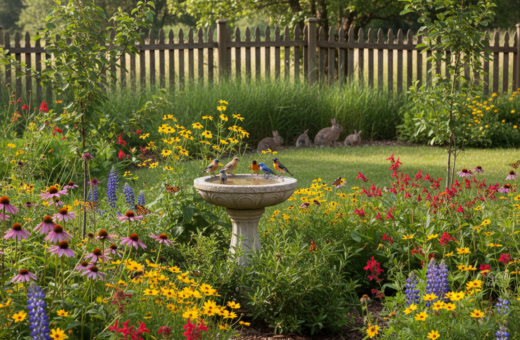
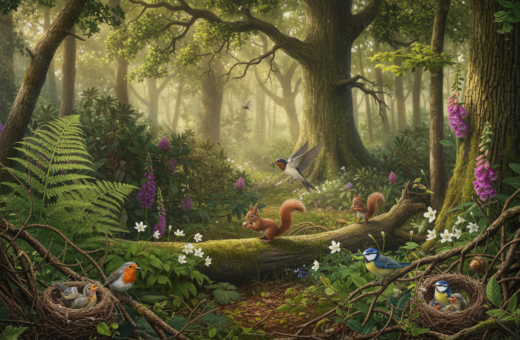
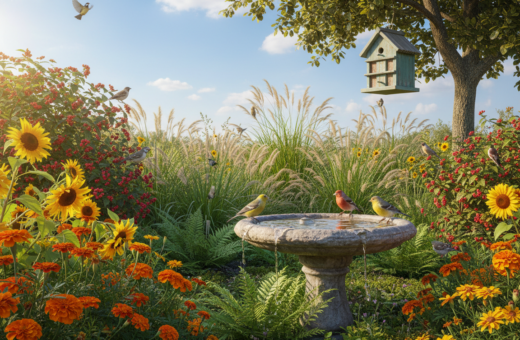
The transformation began with a few intentional moves that made the yard feel welcoming to local wildlife. Simple tweaks gave quick results and led to steady visits from a variety of species.
By offering varied food sources like suet, fruit, and nectar, the homeowner created steady interest. A reliable bird feeder and clean water baths encouraged short stops and longer stays.
Shelter matters: adding dense shrubs and a small brush pile helped birds feel safe. Native plants also supported insects, which added natural food for seedlings and adult finches and hummingbirds.
These practical tips focus on habitat, food, and water. In just weeks, the garden went from quiet to lively, proving that thoughtful changes support local wildlife and bring daily delight.
Key takeaways: provide varied food, set up clean water baths, and create shelter with native plants to support a healthy habitat.
Essential Strategies to Attract More Backyard Birds
Small, deliberate adjustments to plantings and feeders quickly drew a wider range of winged visitors. Practical birdscaping focuses on three essentials: food, shelter, and water.
Provide multiple feeder styles and seed-producing plants to offer a variety of food. Mixing tube, platform, and suet options invites different species and helps create a stable feeding routine.
Incorporate trees and native shrubs to give natural shelter. These plantings help birds feel safe from predators and offer nesting spots during breeding season.
Consistent access matters. Place feeders within sight lines of cover so visitors can feed and retreat quickly. Plan the yard so food, water, and shelter are all within short flight distances.
Quick tips:
- Rotate seed blends seasonally to appeal to varied species.
- Keep at least two water sources: a shallow bath and a dripper.
- Position feeders near trees but away from heavy predator pathways.
Selecting the Right Feeders and Food Sources
Smart feeder choices and diverse food sources encourage steady visits from local species. The right mix supports seasonal needs and helps maintain healthy populations in the yard.
Understanding Different Seed Blends
Seed blends vary by composition. Nyjer and small-profile mixes suit finches, while sunflower hearts draw a wider range of birds. For details on types, consult a guide to types of seed.
Benefits of Offering Suet Blocks
Suet packs concentrated fat and protein. Many species rely on that boost in cold months. Adding suet helps feathered friends maintain energy when insects and fruit are scarce.
Optimizing Feeder Placement for Safety
Place a bird feeder where it is visible from the house but out of reach of common predators like neighborhood cats. Keep perches near shrubs or trees so small species can escape quickly.
- Choose size and style to match the species you want to support.
- Rotate food seasonally and store seeds airtight to reduce pests and disease.
- Include nectar for hummingbirds—over 50 North American species drink nectar, so it’s a valuable source.
Providing Fresh Water for Drinking and Bathing
A steady, clean supply of water makes a noticeable difference in how often wildlife visits the yard. Small updates to water sources support health and daily routines for local species.
Incorporating Moving Water Features
Shallow baths work best. A depth of 1 to 3 inches lets birds drink and bathe safely. Place baths where visitors can see cover nearby.
Daily maintenance is crucial. Make sure to empty and refill baths each day. Stagnant water can carry disease and harm small visitors.
- Keep at least one shallow bowl and a moving dripper or small waterfall.
- Use a pump or dripper to create subtle motion that will attract shy species.
- Position a bird feeder within sight of the water so birds can feed, drink, and retreat to cover.
“Clean, moving water becomes a centerpiece for wildlife activity and resilience.”
Well-maintained water sources are a vital habitat feature. They support hummingbirds and other species, especially during hot spells, and help create a healthy environment that encourages regular visits.
Creating Natural Shelter with Native Plants
Layered plantings of native species give the yard immediate refuge. Shrubs, small trees, and groundcovers form habitats that support nesting and daily activity.
Native plants sustain local insects and provide seasonal food like seeds and fruit. That in turn supports finches, hummingbirds, and other avian visitors.
- Use a mix of trees, shrubs, and perennials to supply year-round shelter and food.
- Place denser plantings near feeders and water so small animals can escape predators quickly.
- Include water-side plants around baths to give hiding places and soft cover.
- Choose native species that bloom at different times to offer nectar and sustain insects.
A thoughtful plants plan builds a resilient habitat. It reduces maintenance needs while helping wildlife find nesting sites and daily food in the yard.
Installing Nesting Boxes for Local Wildlife
A few correctly sited nest boxes offer immediate shelter and invite cavity-using species to consider the yard a safe home.
Why install boxes? At least 46 North American species use cavities for raising young. Nest boxes reduce exposure to predators and give species a secure spot to breed.
Best Practices for Placement
Place boxes where they can watch the area. Mount them in an open area with nearby cover so birds feel secure while monitoring for threats.
- Set entrance height to match target species and keep the correct hole size.
- Face boxes away from prevailing winds and sunlight to prevent overheating.
- Keep boxes 10–30 feet apart to support a healthy variety of species.
Providing Essential Nesting Materials
Offer natural materials like twigs, dry leaves, moss, and pet-safe fur. Leave them in a sheltered spot so residents can carry what they need to build nests.
Combine boxes with native plants and varied food sources such as seeds and fruit to help birds thrive. For local guidance on habitat design, see a short resource page like nest box planning.
Maintaining a Safe and Healthy Environment
Keeping feeders, baths, and plantings clean and well-placed makes a real difference for visiting wildlife.
Regular cleaning reduces disease risk. He or she should scrub feeders and baths weekly, rinse well, and let surfaces dry.
Store seed properly. Make sure seeds are in airtight containers to keep rodents and other animals from raiding sources in winter.
- Offer fresh water and suet to help birds stay hydrated and fueled during cold spells.
- Limit pesticides and favor native plants to support nesting and beneficial insects.
- Place feeders near cover but away from heavy traffic to protect small species.
“Clean feeders and safe plantings give feathered friends the best chance to thrive.”
Follow these tips to maintain a healthy environment. Small, steady actions protect species and keep the garden productive for people and animals alike.
Adding Color to Enhance Visibility
Strategic splashes of color guide travelers toward food, shelter, and water in the garden. Bright flowering plants serve as visual beacons for passing species and make it easier for them to locate resources quickly.
Choose a mix of native plants that bloom at staggered times. Include a few fruiting shrubs and small trees to offer seasonal fruit and cover. These layers create depth and steady visual cues across the yard.
Plant nectar-rich flowers to support hummingbirds and other nectar feeders. Position a shallow water source near colorful beds so movement and color work together to draw interest.
The Cornell Lab of Ornithology notes that unusually bright colors stand out and catch the eye of passing species. Use that insight to place vivid blooms where they contrast with foliage and sky.
- Tip: Group colors into small clusters so they read as a single signal from above.
- Tip: Combine flowering perennials with fruit-bearing shrubs to offer both nectar and fruit within sight lines of water.
- Tip: Keep at least one tree close enough to provide quick shelter after a stop.
Conclusion
Small, targeted steps make a big difference. A few thoughtful changes to food, water, and shelter often bring visible wildlife activity within weeks.
Provide consistent feeders, fresh water, and native plant layers to create a safe, nourishing habitat. Regular maintenance of feeders and nesting boxes keeps the space healthy and reduces disease risk.
Start with native plants and staggered bloom times to support insects and seasonal food. For practical guidance on habitat design and upkeep, see this short guide to creating a bird‑friendly garden.
Begin today with one small change; steady care will reward the yard with visits, song, and seasonal activity.